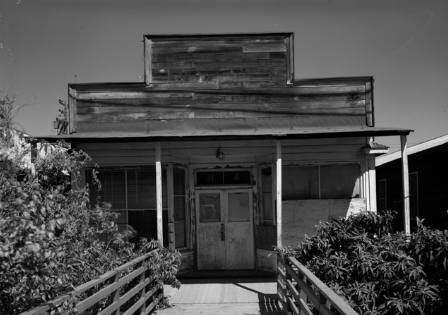

Locke History
Established in 1915, Locke is the last remaining rural Chinatown in America. During its heyday from the 1920’s to the 1940’s Locke was an autonomous island of Chinese culture with a permanent population of about 600, including many families, with seasonal farm laborers numbering as many as 1000. At one time Locke had four restaurants, a half dozen markets, dry goods stores, five brothels, a post office, two slaughter houses, a flour mill, canneries, shipping wharves , an opera, speakeasies during Prohibition, and five gambling houses.
Located about 30 miles south of Sacramento, Locke is the legacy of the extraordinary efforts made by the Chinese in developing agriculture in California. On August 2, 1970 the entire town was nominated to the National Register of Historic Places by the Sacramento County Historical Society.
Locke still looks very much like it did 70 years ago. It has withstood the threats of fire, floods, poverty, discrimination, and neglect. Of the seventy or so residents in Locke today, less than a dozen are Chinese. Although many of Locke’s storefronts, facades and homes have fallen into disrepair over the years, there is now a concerted effort, led by the Locke Foundation, to repair and restore Locke’s structures back to their historic appearance. In 1990 Locke became a National Historic Landmark. Designated by the United States Secretary of Interior, National Historic Landmarks are defined as nationally significant historic places possessing exceptional value or quality in illustrating or interpreting the heritage of the United States. Today, fewer than 2500 historic places (nationwide) bear this distinction.
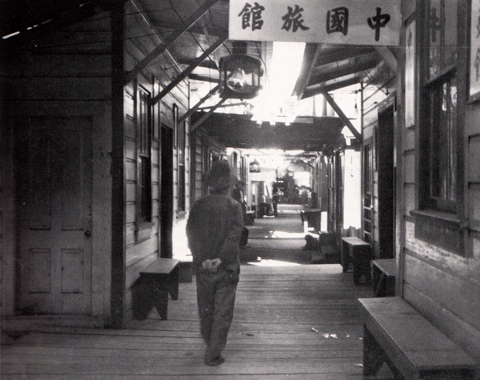
Chinatown, California Delta 1925, (CA State Library)
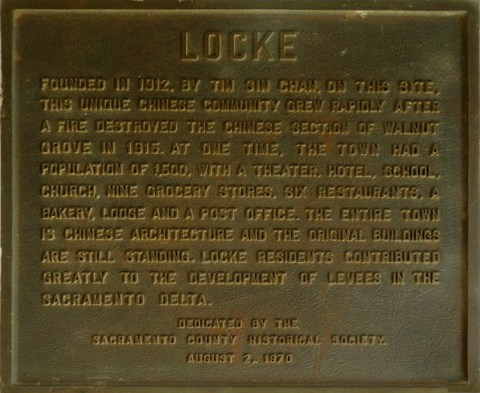
Statement of Significance
by the U.S. Secretary of Interior – December 14, 1990
Founded in 1915, Locke is the largest and most intact surviving example of an historic rural Chinese-American community in the United States, including more than 50 commercial and residential buildings and covering approximately 14 acres along the east bank of the Sacramento River, south of the city of Sacramento. Locke is the only such community remaining in the Sacramento-San Joaquin River Delta, which was a particularly important area of rural Chinese settlement.
Fast Facts of Locke
The Chinese have been in the Delta since the 1860s. The Delta’s Chinese population was made up of two separate groups who had emigrated from neighboring districts in Guangdong Province in southeastern China. One group came from Sze Yap, and the other from Chungshan district.
The California state legislature passed the Swamp and Overflow Act of 1861 to encourage levee building for reclamation purposes. Subsequently, between three to four thousand Chinese laborers came to the Delta under contract to American developers and built hundreds of miles of levees. They cut drainage ditches, built floodgates, and slowly piled up small levees. Between 1860 to 1880 a total of 88,000 acres was reclaimed from the Delta marshlands.
After the building of the levees, many Chinese remained in the Delta to become farm workers and tenant farmers.
In 1915 Walnut Grove’s Chinatown burned to the ground. The Chungshan group moved out and built a town on land leased from land owner George Locke. A group of Chungshan merchants, headed by Bing Lee, financed the construction of nine residential houses and opened a general merchandise store in the new town.
Under terms of California’s 1913 Alien Land Act, Chinese were not allowed to own land. The Chinese could only lease the land to build the town because the state law forbade them from purchasing it. The law was not declared unconstitutional until 1952.
Originally the town was called Lockeport, the name was later shortened to Locke.
Tin-san Chan and two other Chinese merchants leased and built the first three buildings in George Locke’s property in 1912. They consist of a boarding house, a gambling parlor, and a saloon. The buildings are located at the south end of town where the former saloon is now the Locke Garden Restaurant.
The asparagus boom was in full flower by 1920 in the Delta. More and more houses were being built in Locke. In 1925, Southern Pacific enlarged the packing shed across the street from Locke; consequently Locke expanded even more rapidly. More than 600 Chinese were believed to live in town.
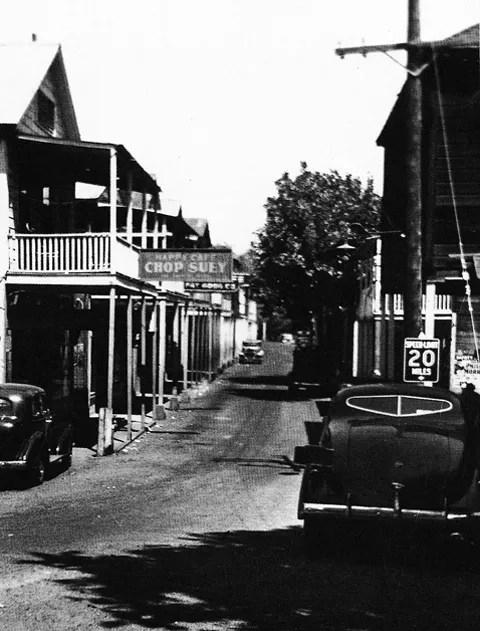
Main Street, 1939
Locke was a lively place in the 1920s. It had a Chinese owned movie theater called Star Theater which showed silent black and white films. A Chinese herbalist dispensed medicine and medical advice. There were six restaurants, nine grocery stores, a flour mill, a hotel, and numerous boarding houses.
A gradual decline in the Delta’s Chinese population began after World War II, and population decline became more rapid in the 1950s. As more and more young Chinese Americans became better educated than their parents, they rarely stayed in agricultural districts. When the state government closed down all gambling business in town, merchants started to move out, and the population in town declined even faster.
Throughout the 1920s illicit venues opened including: gambling parlors, speakeasies, a few opium dens, and several houses of prostitution.
Locke Today
In 2015 the town of Locke celebrated the centennial of its founding in 1915. Located on the Sacramento River within the Sacramento-San Joaquin Delta, Locke has the distinction of being the largest, most complete rural agricultural Chinese American community in the U.S. It is listed as a National Historic Landmark. Locke prides itself on its preservation of history, its commemoration of the first wave of Chinese immigrants who endured prejudice, alienation and poverty, as well as its persistence in existing, despite the modernization and disappearance of towns like itself. We would like to express our gratitude to all our donors, members, volunteers, residents and visitors who have contributed to, and advocated for the preservation of Locke.
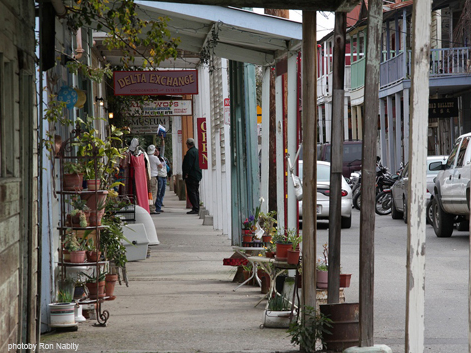
Locke Through Visitors’ Eyes
Despite its small size, Locke receives hundreds of visitors each year. We have selected exceptional photographs by the people who have captured the character of Locke. This year includes: Allison Brooke Eastman, Jo Chan, Bo Ching, Jennifer Davis, Jen’s Photography, Jonathan Haeber, Nancy Yu, Pedro Marenco, Ron Nabity and Sally Chisom. We would like to thank all the people for taking an interest in Locke and documenting it through their eyes. If you would like to submit a photo, please contact newsletter(at)locke-foundation.org
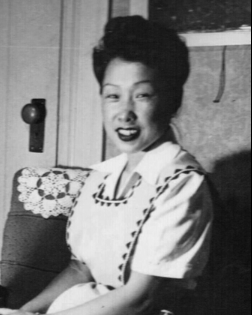
Faces of Yesterday
A tribute to the original families of Locke. The Jue Joe family and James Motlow have provided the photos. If you have any archival photos of former Locke residents we would greatly appreciate copies for our website as well as The Genealogy project led by Stuart Walthall. Please contact us if you would like to submit any photos. If you are interested in the lives of Locke, you can purchase James Motlow’s book ‘Bitter Melon’ at the Chinese Cultural Shop or at Moon Cafe. Below is a slide show produced by the Locke Foundation of previous Locke residents.
Historic American Buildings Survey
This impressive architectural survey of the town of Locke was undertaken by the Historic American Buildings Survey in cooperation with the Sacramento Housing and Redevelopment Agency, the State of California Department of Parks and Recreation and the Chinese Historical Association of America. This invaluable documentation is preserved through the Library of Congress.
The project was completed during the summer of 1979. Professors John P. White (Texas Tech University) and Pamela O. Chang (University of California) worked with student architects William F. Hand , Clemson Lam, Gregory C. Tung and David G. Virgil to create this important glimpse into a timeline of Locke.